A history of bathing in Korea: from sacred springs to the jjimjilbang
Koreans have been bathing for well over a thousand years, though not the way they do today, with a soak in a shared hot pool and then a scrub.
01
Many kinds of bathing
Washing in a stream, visiting a hot spring, cleansing before a ceremony and paying to use a bathhouse each grew out of different circumstances. Old records show how the reasons for bathing, the places it happened and what it meant all changed over time.
02
Ancient Korea: a bath in a founding myth
One of the best-known early mentions is in the Samguk Yusa (Memorabilia of the Three Kingdoms). In the story of Hyeokgeose, the founding king of Silla, a child comes out of an egg and is washed in a spring called Dongcheon, after which his body gives off light.
This is a founding myth written down centuries later, so it says nothing about how often people in Silla actually washed. What it shows is a bath marking the arrival of an extraordinary ruler and the start of a kingdom.
The Samguk Sagi (History of the Three Kingdoms) has a more down-to-earth mention. Under the 17th year of King Seocheon of Goguryeo (286 CE), it records that the king’s younger brothers, Il-u and Sobal, claimed to be ill, went to a hot spring and gathered their followers there.
So hot springs were known and used in Goguryeo’s royal circle. Whether ordinary people bathed in them, the record doesn’t say.
03
Goryeo: what a visiting envoy saw
Xu Jing, an envoy from Song China, visited Goryeo in 1123 and wrote up what he saw in the Xuanhe Fengshi Gaoli Tujing, known in Korea as the Goryeo Dogyeong.
In volume 23, on washing and laundry, he writes that people bathed before leaving home in the morning and twice a day in summer, and that men and women left their clothes on the bank and washed in streams.
It’s one foreigner’s account from one visit, not a survey of every region and class, and washing in streams is not evidence of indoor mixed bathhouses. The often-repeated line that Goryeo people bathed “three or four times a day” also goes beyond the source. Xu Jing wrote twice a day, in summer.
04
Joseon: a summer custom and washing before rites
It’s often said that Confucian values put Joseon people off bathing. Ideas about showing the body did shape how people washed, but washing, ritual preparation and seasonal customs still mattered.
Take Yudu, on the 15th day of the sixth lunar month. Books such as the 19th-century Dongguk Sesigi describe people washing their hair and bodies in flowing water that day to drive away bad luck: a way to cool off in summer and a wish for good health at once. A 19th-century book calling a custom old doesn’t tell us exactly when it began, though.
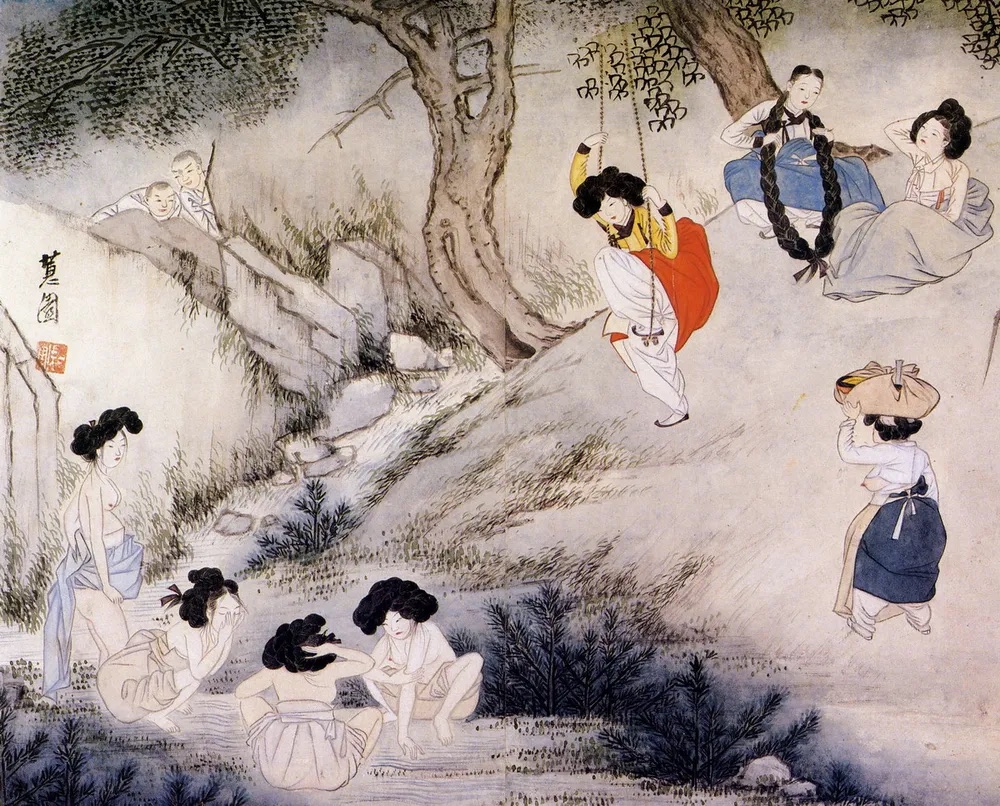
The painting at the top of this page, Shin Yun-bok’s Dano Pungjeong from the late 18th century, shows women washing in a mountain stream on Dano, the fifth day of the fifth lunar month.
Bathing was also part of getting ready for ancestral rites and other important occasions. The word mogyokjaegye (沐浴齋戒) joins washing the body with putting your conduct and mind in order, so that you approach the occasion calm and respectful.
05
Joseon: royal hot springs and sweating rooms
Hot springs were where kings went to recover. The Annals of King Sejong record the royal procession arriving at a temporary palace at a hot spring on the 20th day of the third lunar month of 1441. A trip like that meant lodging, attendants and a whole entourage to organize. It was court business, not a quick getaway.
The annals also mention hanjeung, using heat to make people sweat. An entry from the second day of the tenth lunar month of 1422 is about facilities called hanjeungso. Officials reported that some people had died after being made to sweat without proper attention to their symptoms. The answer was to have doctors examine patients first and decide whether sweating suited them, and to hold doctors and monks responsible if careless examination caused harm.
So heat was part of how the sick were treated at the time, and people knew it could be dangerous. That isn’t modern evidence that saunas cure disease or flush out toxins, and a hanjeungso, a place of treatment and relief for the sick, was a different thing from today’s jjimjilbang.
06
The early 1900s: bathhouses in the newspaper
Newspaper ads show paid bathing in Seoul by the start of the 20th century. The Seoul Metropolitan Archives points to a 1901 ad for repaired baths and a new heated bath at Chwihyanggwan, a 1902 notice of free bathing at Jangsujeong, and a 1904 opening ad for Hyecheontang. Some of these early places sold food, drink and entertainment alongside the bath.
That complicates the common claim that Korea’s modern bathhouse history starts with a single bathhouse in the 1920s. A lot depends on what you count as a “modern public bathhouse.” An opening ad proves a business existed, but it doesn’t tell you how often ordinary people used it.
07
After liberation: the neighborhood bathhouse
In the decades after 1945, public bathing became a matter of city hygiene and public services. A municipal bathhouse opened in Jangseok-dong, Seoul, on March 12, 1960, and photos of the opening survive in the Seoul Metropolitan Archives. That July the city passed an ordinance on running it, including management and fees. A bathhouse could be a public health and welfare facility.
The scrubbing cloth now tied to Korean bathing is a modern product too. A Korean government publication credits Kim Pil-gon with developing it in 1967 and says the name “Italy towel” comes from fabric imported from Italy. Others have been credited as well (see our Italy towel story). Either way, the towel belongs to the history of modern manufacturing, and its date says nothing about when Koreans first scrubbed their skin or when professional bath attendants appeared.
08
From the 1990s: the jjimjilbang
The jjimjilbang brought bathing together with other kinds of leisure. The 2008 Leisure White Paper describes jjimjilbangs, which appeared in the early 1990s, as combined facilities with baths, saunas and heated rooms, restaurants and entertainment. People came to stay: to rest, eat and spend the day, not just to wash and leave.
It keeps changing. The Seoul Metropolitan Archives records small neighborhood bathhouses closing, bigger spas and jjimjilbangs opening, and old bathhouses turned into cafés and cultural spaces. A bathhouse is now part of everyday city life, and part of the debate over which places hold a neighborhood’s memory.
09
Sources
- Samguk Yusa and Samguk Sagi: Korean History Database (db.history.go.kr)
- Goryeo Dogyeong: Academy of Korean Studies (dh.aks.ac.kr) and contents.history.go.kr
- Yudu and mogyokjaegye: Encyclopedia of Korean Folk Culture (folkency.nfm.go.kr) and Encyclopedia of Korean Culture (encykorea.aks.ac.kr)
- Annals of King Sejong: Annals of the Joseon Dynasty (sillok.history.go.kr)
- Early bathhouse ads, the 1960 Jangseok-dong bathhouse and bathhouse closures: Seoul Metropolitan Archives (archives.seoul.go.kr)
- Italy towel and the 2008 Leisure White Paper: Korea.kr
Ready for your first soak?
Read the Italy towel storyBONBLE SEOUL. YOUR GUIDE TO KOREAN BATH CULTURE.
More from BONBLE magazine
 GuideFirst time? Here’s the vibe.
 GuideThe Korean Body Scrub: Your Guide to Seshin
 SeoulThe best jjimjilbangs in Seoul: 10 we’d actually go back to
 GuideCan you go to a Korean bathhouse with tattoos?
 GuideKorean bathhouses for solo female travelers: a calm, safe guide
 GuideHow much does a Korean bathhouse cost? 2026 price guide
 ToolKorean phrases for the bathhouse: tap, show, done
 WellnessWhy soak? What the science says
 GuideBody scrubs in Myeongdong: how to pick a kiln spa and book it
 RoutineThe Korean jjimjilbang routine, from packing to banana milk
 SeasonKorean hot springs and outdoor baths for winter
 The Soak EditSoak kit: what to pack for your Korean bathhouse era
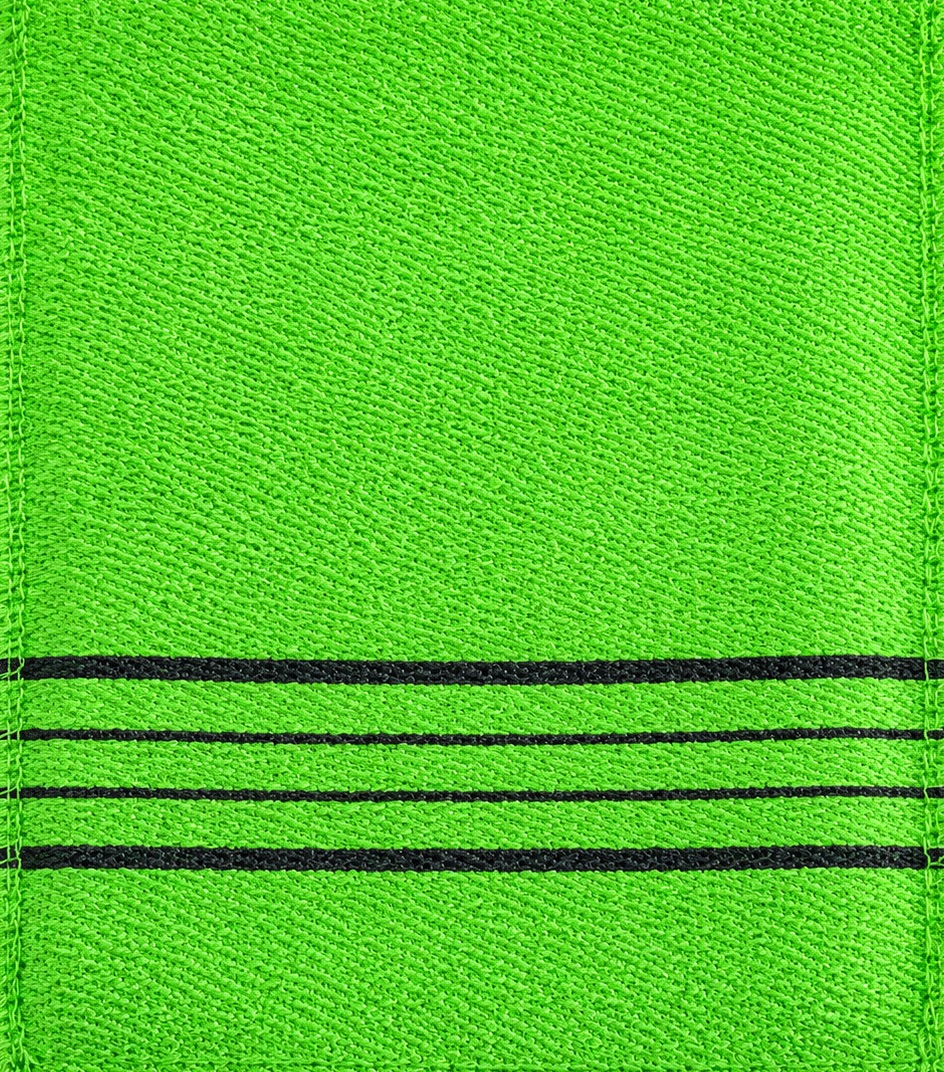 CultureThe Italy towel: a Korean bathhouse icon
 The Soak EditA Korean Bathhouse Experience at Home: What Makes Exfoliating Soap Different?
 PlanPlanning a Korean body scrub and cosmetic treatments? Book the scrub first
 Culture“Korean-style akasuri” on Japan’s spa menus: discovering seshin in Korea
 CultureA fresh start begins with a bath
 CultureDongnae: a history of hot-spring bathing in Busan
- CultureSuanbo: a history of hot springs and public bathing in Korea